Blog
Go backThe Scunthorpe Problem: A Short History of Filters That Can't Read
Deep Dives · September 23rd, 2026
In April 1996, a retired steelworks mill controller named Doug Blackie sat down to join the internet. He filled in the AOL UK signup form, typed his address and hit submit. Rejected. He tried again. Rejected. Every time he entered the name of his hometown, AOL's software refused to process the application. The town was Scunthorpe. Look at letters two through five. AOL's profanity filter certainly did. The story made the front page of the Scunthorpe Evening Telegraph, and a small-town customer service failure became the name of a problem that computers still haven't solved. Thirty years later, we have spam filters with machine learning, content moderation with neural networks and AI that writes poetry. And somewhere, right now, a filter is blocking a perfectly innocent word because of what's hiding inside it.
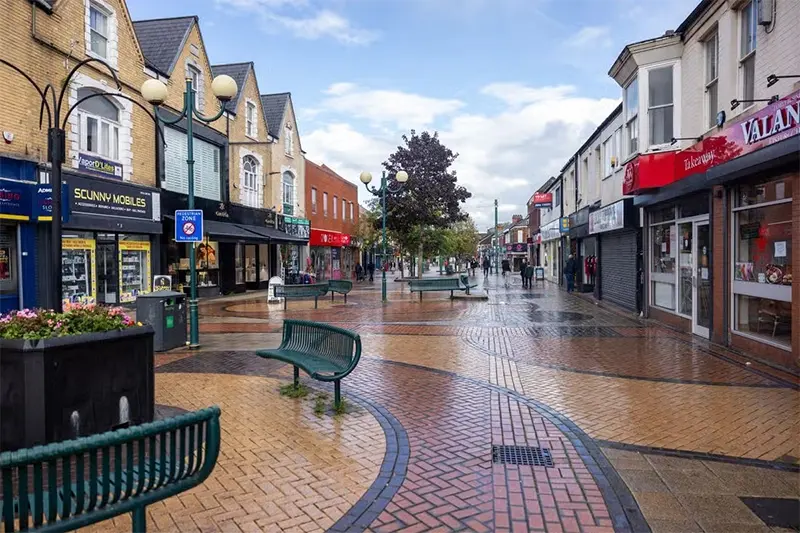 Scunthorpe, North Lincolnshire: steel town, market town, accidental patron saint of bad profanity filters.
TL;DR
- The Scunthorpe problem is when a filter blocks something innocent because it contains a string of letters that looks offensive.
- It's named after a 1996 AOL incident where residents of Scunthorpe couldn't create accounts because of the town's name.
- The victims since include towns, surnames, museums, a magazine, a paleontology conference and a graduation cake.
- It persists because matching letters is easy and understanding meaning is hard.
- Email suffers most because blocked mail usually fails silently. Nobody tells you what you didn't receive.
April 1996: A Town Too Rude for AOL
AOL UK had been running for about three months when Scunthorpe found its filter. The company's fix was practical, if not dignified: residents were told to spell their town "Sconthorpe" while AOL sorted things out.
Scunthorpe wasn't alone. Penistone in South Yorkshire and Clitheroe in Lancashire have spent years discovering what's hidden in their names. And the problem outlived AOL's early filter. In the early 2000s, Google's SafeSearch hid local Scunthorpe businesses and services from search results for the same reason.
A town can't change its name to suit a spam filter. So the filters kept winning.
The Hall of Innocent Victims
Once people knew what to look for, the examples kept coming.
People. In 2004, Craig Cockburn (pronounced "Coburn") couldn't use his surname on Hotmail. Hotmail's suggestion was to spell it with a zero instead of an O, until it reversed the ban. His job title caused trouble too: "software specialist" contains the name of a certain erectile dysfunction drug. In 2008, Herman Libshitz couldn't get an email address with his own name from Verizon, which later apologized.
Places. In 2008, the free Wi-Fi in Whakatāne, New Zealand blocked searches for the town's own name. In Māori, "wh" is usually pronounced like "f", and the filter's sound-alike matching drew its own conclusions. In 2021, Facebook apologized for flagging Plymouth Hoe, a famous landmark in Devon, as misogynistic. A few months later it took down the official page of the French town of Bitche. The town hall created a replacement page using its postal code instead.
Institutions. In 2003, a new spam filter at the British House of Commons blocked MPs' emails about the Sexual Offences Bill they were debating at the time. It also blocked email written in Welsh, because it didn't recognize the language. In 2004, London's Horniman Museum found it was missing email because filters read its name as something else entirely.
A magazine that gave up. The Beaver, a Canadian history magazine, had published under that name since 1920. In 2010, after 89 years, it renamed itself Canada's History. Filters kept blocking its emails and burying it in searches, and the publisher said the name had become an obstacle to growth.
Everyday words. A Manchester man's 2006 complaint to his council about a planning application was blocked because it mentioned an "erection." Job applicants who graduated cum laude have watched their résumés vanish into spam folders. In 2018, a Florida mother ordered a graduation cake online reading "Summa Cum Laude." The supermarket's website wouldn't allow it, and the cake arrived reading "Summa --- Laude." In 2020, a paleontology conference's virtual meeting platform blocked the word "bone."
When Filters Rewrite Instead of Block
Blocking is embarrassing. Rewriting is worse.
Some filters don't reject a word; they replace it. Swap "ass" for "butt" everywhere and "classic" becomes "clbuttic." The internet adopted "clbuttic mistake" as shorthand for the whole phenomenon.
Yahoo Mail had its own version. In 2001, it started rewriting certain words in incoming email to block malicious code, without checking where in the message they appeared. "Eval" became "review." So "medieval" arrived in people's inboxes as "medireview." Nobody asked for it. Nobody was told.
Why Filters Can't Read
The core problem is simple. Finding a string of letters is trivial for a computer. Understanding what those letters mean requires context: language, culture, names, geography and intent. That's the hard part.
Take German, which glues words together. When one word ends with a linking "s" and the next starts with "ex," the result contains "sex." "Staatsexamen," the German state examination for teachers, lawyers and doctors, has reportedly triggered search filters for exactly that reason.
The usual fixes each have limits:
- Allowlists exempt known innocent words like "Scunthorpe." That works until the next town, surname or German compound you didn't think of.
- Matching whole words only fixes "Scunthorpe" but lets through anyone who glues the rude word to another one.
- Smarter, context-aware filters help, but they make new mistakes. In 2025, a Reddit moderation tool was flagging "Luigi" as potentially violent content. The comment that drew attention to it was about a Nintendo game.
Every filter makes a trade-off between blocking too much and blocking too little. The Scunthorpe problem is what blocking too much looks like.
Why Email Gets It Worst
On a forum, a filtered word shows up as asterisks. You notice. You roll your eyes. You move on.
Email is different. When a filter blocks a message, the recipient usually never knows it existed. The Horniman Museum didn't get an error message. It just didn't get its mail. The graduate whose résumé said cum laude never found out why the recruiter didn't reply.
That's what makes the Scunthorpe problem in email so expensive: nothing tells you it happened.
About Our Name
Scunthorpe didn't choose its name. We did, on purpose, and we like it.
Which raises a fair question: should an email address be filtered like a message? A message is something you say. An address is closer to a name or a postcode: it tells people where to reach you. A profanity filter on an email field makes the same mistake AOL made in 1996. It judges an address as if it were a statement.
The good news is that serious mail filtering moved past word lists a long time ago. Today's filters mostly look at who's actually sending, whether the mail is properly authenticated and how the sender behaves over time. That's where we put our effort: proper authentication, clean sending practices, abuse monitoring and constant reputation checks.
Every now and then, a signup form somewhere still runs its email field through a word list from 1996. If you meet one, tell us. We collect them.
Meanwhile, Scunthorpe is still called Scunthorpe. Good for Scunthorpe.
Sources & further reading: The Risks Digest: "AOL censors British town's name!" (1996) · The Allusionist: Scunthorpe Problem · CNET: Google's chastity belt too tight (2004) · Sydney Morning Herald: How Mr C0ckburn fought spam (2004) · BBC: How spam filters dictated Canadian magazine's fate (2010) · BBC: Yahoo admits mangling e-mail (2002) · The Guardian: Facebook apologises for flagging Plymouth Hoe (2021) · Wikipedia: Scunthorpe problem
Related reads: Reply-All Apocalypse · IMAP vs POP3: Which One Should You Actually Use?